

Syros loukoumi: The sweet story of an island
05/11/2026
COLLECTIONS & EXHIBITS
On the second floor of the Museum, an exhibition pays tribute to a sweet heritage inextricably linked to the identity of the island.
Its significance to the local community was officially recognised in 2019, when it was included in Greece’s National Inventory of Intangible Cultural Heritage. This recognition celebrates not only the product itself, but also the know-how, practices and memories associated with its production.

The history of loukoumi traces its roots to Asia Minor and Constantinople. On Syros, its production is closely linked to the founding of Ermoupoli in the early 1820s, when refugees from Chios and Psara settled on the island following the destruction of their homelands.
The newcomers brought with them knowledge and techniques for making sweets. The people of Chios already had a long tradition of using ingredients such as mastic, almonds and rose petals. On Syros, this expertise found fertile ground: the first loukoumi workshops were established even in household courtyards, while production grew alongside Ermoupoli’s commercial and economic prosperity.
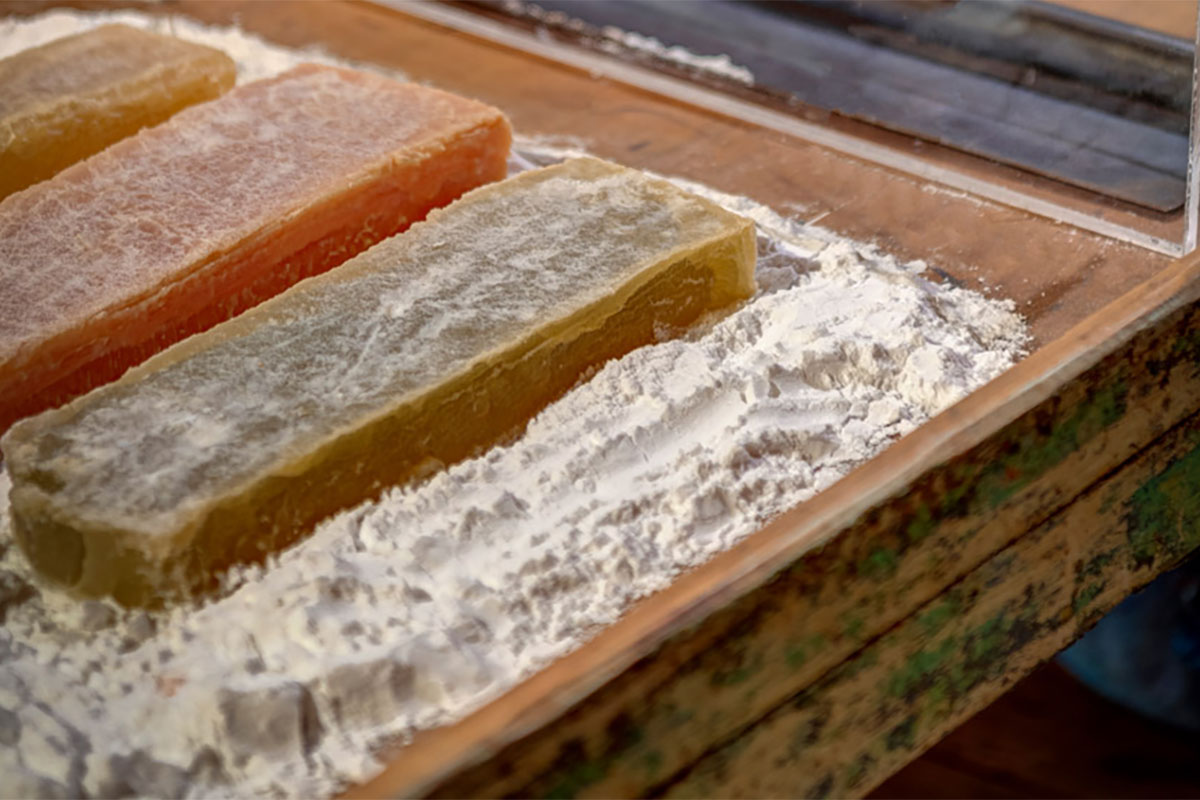
According to the records of the Historical Archive of the Municipality of Ermoupoli, Georgios Arfanis, from Ephesus, was the first confectioner and loukoumi maker. The earliest officially recorded seal belonging to a loukoumi maker in the city dates to 1837 and belonged to Nikolaos Stamatelakis, who came from Constantinople and was of Chian descent.
The trade expanded remarkably. In 1870, records list 55 confectioners and loukoumi makers in Ermoupoli. By 1945, the number of confectioners had risen to 128, many of them from refugee families.
Growing demand boosted the local economy. In 1905, a starch factory was established on Syros under the name “Georgios Papandreopoulos & Co.”, reflecting the sector’s development.
The reputation of Syros loukoumi soon spread beyond Greece. Producers took part in international trade fairs and received distinctions, including at the Vienna Exhibition in 1873 and the Olympia Exhibition in Athens in 1875.
Syros loukoumi was served in royal palaces and supplied to Greek embassies and consulates abroad. Its packaging, decorated with royal coats of arms and portraits, helped establish the product’s distinctive identity. Its commercial success is also reflected in export growth figures preserved in the archives of the Syros Chamber of Commerce and Industry.
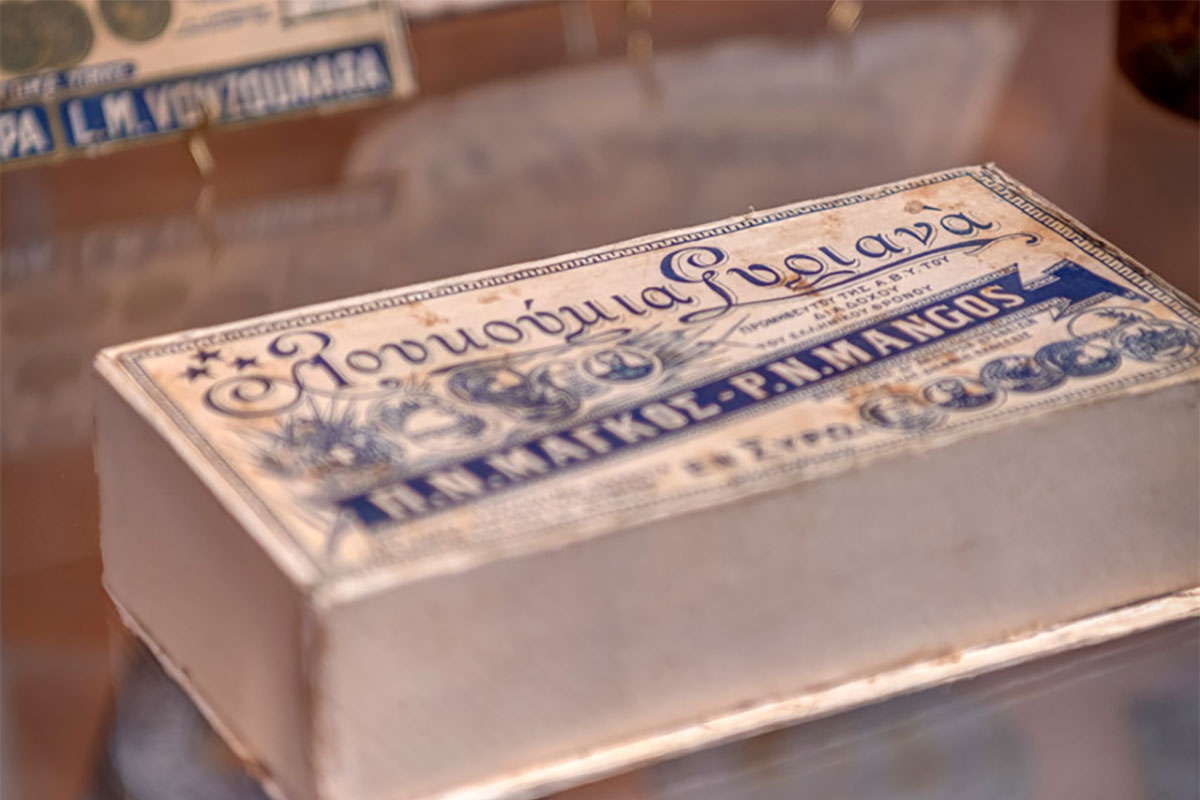
An entire network of trades developed around loukoumi production. Box makers, locally known as koutades, worked alongside printers, lithographers, graphic designers and layout artists to create the packaging.
At the Freris printing house, founded in 1872, labels were printed featuring eagles, lions, tigers, bees, crowns and the head of Hermes. Each loukoumi maker had a distinctive trademark, paying attention to both the quality and the presentation of the product. Before colour printing became widespread on Syros, gold labels were imported from Austria.
The story of Syros loukoumi is about much more than a sweet. It is the story of refugees who brought their craft with them, artisans who helped build its commercial success, and families who kept the tradition alive. It remains a living heritage, connecting the past with the present and forming an integral part of Syros’s collective memory.